
Decide Once. See It Vividly. Remember What You’ve Already Survived.
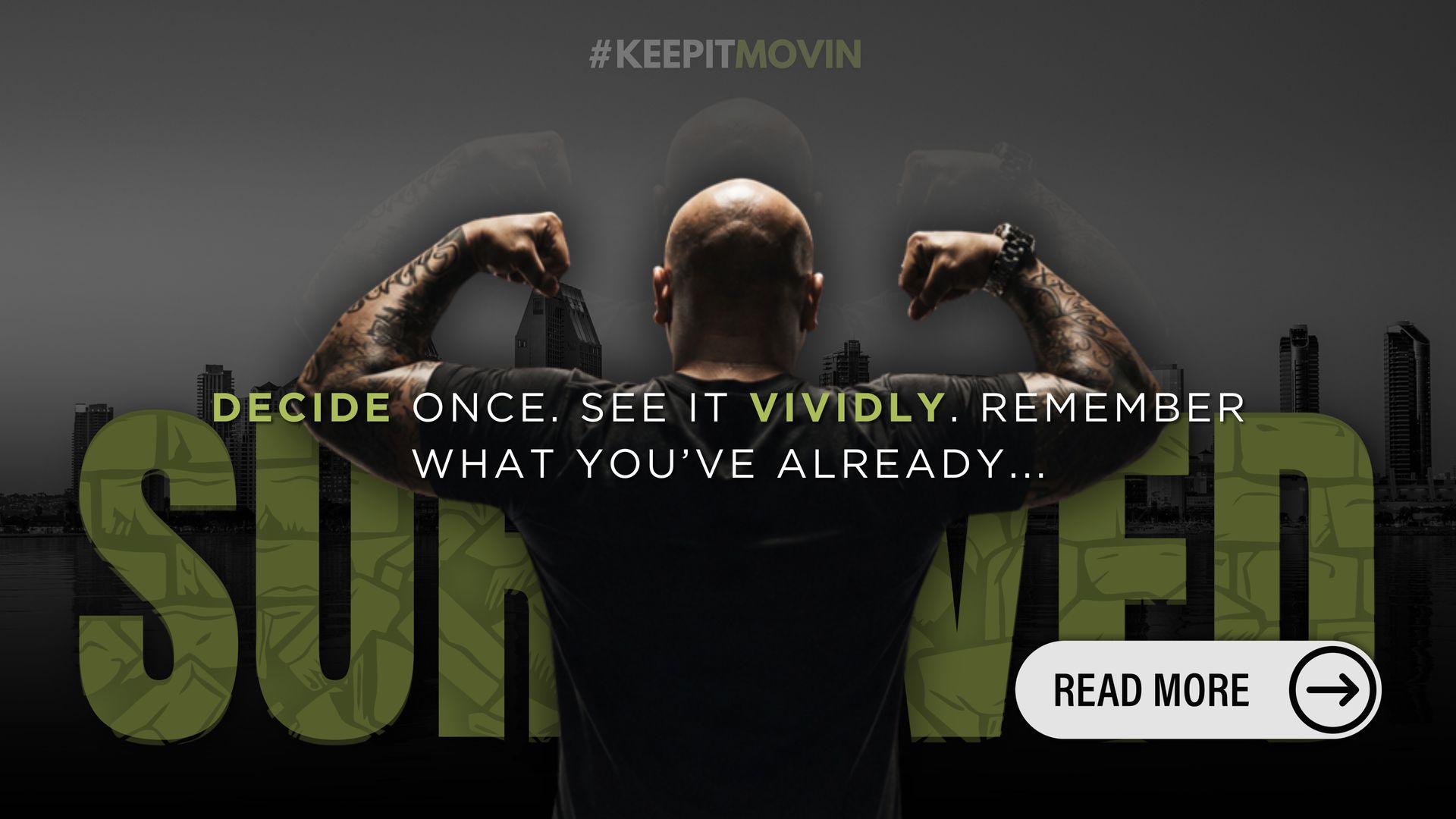
Success in real estate rarely comes down to one great conversation, one perfect listing presentation, or one lucky lead. It is built through the standards you keep when no one is watching, the commitments you honor when motivation is low, and the actions you repeat long enough for momentum to take over. Many real estate agents do not have a talent problem. They have a decision problem. They decide they are going to prospect, then allow the day to get away from them. They decide they are going to follow up with old leads, create content, work their database, or attend training, then reconsider when the work feels inconvenient. That daily negotiation quietly drains momentum, confidence, and results. The answer is not more pressure. It is a better operating system. Decide once. See your vision vividly. Remember what you have already survived. These three mindset shifts can help real estate agents stop relying on temporary motivation and start building a business with discipline, clarity, and staying power.
Decide Once and Stop Renegotiating With Yourself
Every week presents the same opportunity: create meaningful activity before the distractions begin. For real estate professionals, Monday is not simply the start of another workweek. It is the moment that determines whether new conversations will be created, follow-up will happen, and future transactions will move closer to the closing table. The problem begins when important actions become optional. “I will prospect today” becomes “maybe later.” “I will call that lead back” becomes “I do not want to bother them.” “I will make content this week” becomes “I will start when I have more time.” The strongest agents do not make these decisions repeatedly. They decide once, then execute. When you decide that your database will be contacted consistently, the question is no longer whether you feel like calling. When you decide that you will show up for training, prospecting, content creation, and lead follow-up, you no longer have to debate it every morning. The decision has already been made. This is especially important in real estate because the results are often delayed. The call you make today may not create a transaction this week. The client you follow up with may not be ready for months. The open house lead who seems quiet today may become a serious buyer when the timing changes. Consistency works because it keeps you present long enough to be remembered when the opportunity arrives.
What Deciding Once Looks Like in Real Estate
- Establishing a non-negotiable daily prospecting block.
- Following up with leads even when they have gone quiet.
- Staying available for opportunities without trying to carry every task alone.
- Building partnerships with other agents when additional support creates better service.
- Creating a weekly content routine instead of waiting for inspiration.
- Protecting time for training, planning, and database management.
A business built on daily negotiation will always feel unstable. A business built on pre-decided standards becomes easier to sustain because action no longer depends on mood.
Create a Three-Year Real Estate Vision That Pulls You Forward
Goals matter, but a vivid vision is more powerful than a checklist. A goal can be forgotten after the excitement wears off. A clear, detailed vision gives your daily work a destination. It reminds you why the calls, appointments, open houses, follow-up tasks, and difficult conversations matter. Your three-year vision should not read like a vague wish list. It should feel like a future you can see clearly. Write it in the present tense, as though you are already living it. Instead of writing, “I want to close more homes,” write, “I consistently close 50 homes each year through repeat clients, referrals, open houses, and a strong online presence.” Instead of writing, “I want more financial freedom,” write, “I have built the income, savings, systems, and support that allow me to serve clients at a high level while being present for the people who matter most.”
Specificity creates an emotional connection. Real numbers, real routines, real people, and real outcomes make the vision more believable and more motivating.
What to Include in Your Three-Year Vision
Production and Business Growth
Define your annual sales volume, number of transactions, gross commission income, average price point, and top lead sources.
Team and Support Systems
Identify the people and systems that help you grow. This may include a transaction coordinator, lender partners, showing support, marketing assistance, or an operations process that keeps you focused on high-value work.
Client Experience
Describe what clients say about working with you. Consider your communication style, service process, reputation, reviews, and referral relationships.
Finances and Lifestyle
Include the income, savings, flexibility, and time freedom you want to create. Think beyond production numbers and define what a normal week feels like.
Identity and Impact
Consider who you become through the process. What beliefs have you outgrown? What example are you setting for your family, clients, team, or community?
The 10X Question
Ask yourself what would change if your business became ten times more effective, not simply twice as busy. Often, this reveals what needs to be eliminated, delegated, or simplified.
A Clear Review Date
Choose an exact date three years from now. A specific date turns a dream into something you can revisit, measure, and move toward. The purpose of this exercise is not to create pressure. It is to create direction.
When your vision is clear, you do not need to force yourself through every difficult day. The future you have defined begins to pull you forward.
Your Past Is Proof That You Can Handle What Is Next
Many agents assume they need another script, another CRM, another course, or another strategy before they can grow.
Tools matter. Training matters. Systems matter. But many of the answers people are looking for already exist inside them. You have already overcome challenges that required persistence, courage, problem-solving, and resilience. You have handled difficult seasons, career transitions, personal setbacks, financial pressure, uncertainty, and moments when quitting would have been easier. That history is not separate from your real estate business. It is evidence. The agent who stays visible after a past client closes may eventually earn referrals from that client’s family. The agent who follows up with someone they met casually may create an unexpected buyer relationship. The agent who enters an unfamiliar market, shows up prepared, and earns trust can win opportunities that seemed out of reach. None of these outcomes require perfection. They require presence. Real estate rewards the professional who follows through, stays relevant, and refuses to disappear after the first conversation.
Consistency Is Still the Most Valuable Real Estate Strategy
The real estate industry will continue to evolve. New technology, lead platforms, market conditions, and social media trends will always create new opportunities. But the fundamentals remain the same. People work with the agent they remember. People refer the professional they trust. People respond to consistent communication. People choose the person who shows up. A strong database is not built through one email campaign. A strong referral business is not built through one closing. A strong reputation is not built through one successful transaction. It is built through consistent contact, thoughtful follow-up, visible expertise, and a willingness to stay connected even when there is no immediate commission attached to the relationship. Before searching for a new strategy, ask yourself: What have I already overcome that proves I can handle the challenge in front of me? The answer may be more useful than any new tool.
Three Mindset Shifts for Real Estate Agents
1. Decide Once
Set your standards for prospecting, follow-up, content, availability, and client service. Stop treating important actions like daily negotiations.
2. See It Vividly
Write your three-year vision in the present tense. Include real numbers, real routines, real support systems, and a clear picture of the business and life you are building.
3. Remember the Proof
You have already made it through difficult seasons. Your resilience, adaptability, and ability to keep moving are not theories. They are proven strengths.
Conclusion
You do not need to become someone entirely different to build a successful real estate business. You need fewer negotiations with yourself. You need a clearer vision for where you are going. And you need to remember that you have already survived challenges that required more from you than a difficult week of prospecting or a slower lead month. The business you want to build starts with one decision that you stop revisiting. Decide once. See it vividly. Remember what you have already survived. Then keep moving toward the real estate business, life, and legacy you said you wanted.
Join Our COmmunity
Behind every great achievement, there's a community.
Read our story and become part of it.

Our Offices
Private Offices • Dedicated Desks • Meeting Rooms

Our Leadership
The Team Dedicated To Your Success

Why EXP?
Learn why #TeamFast choose to partner with eXp Realty.

Our Toolbox
See all the tools #TeamFast uses.