
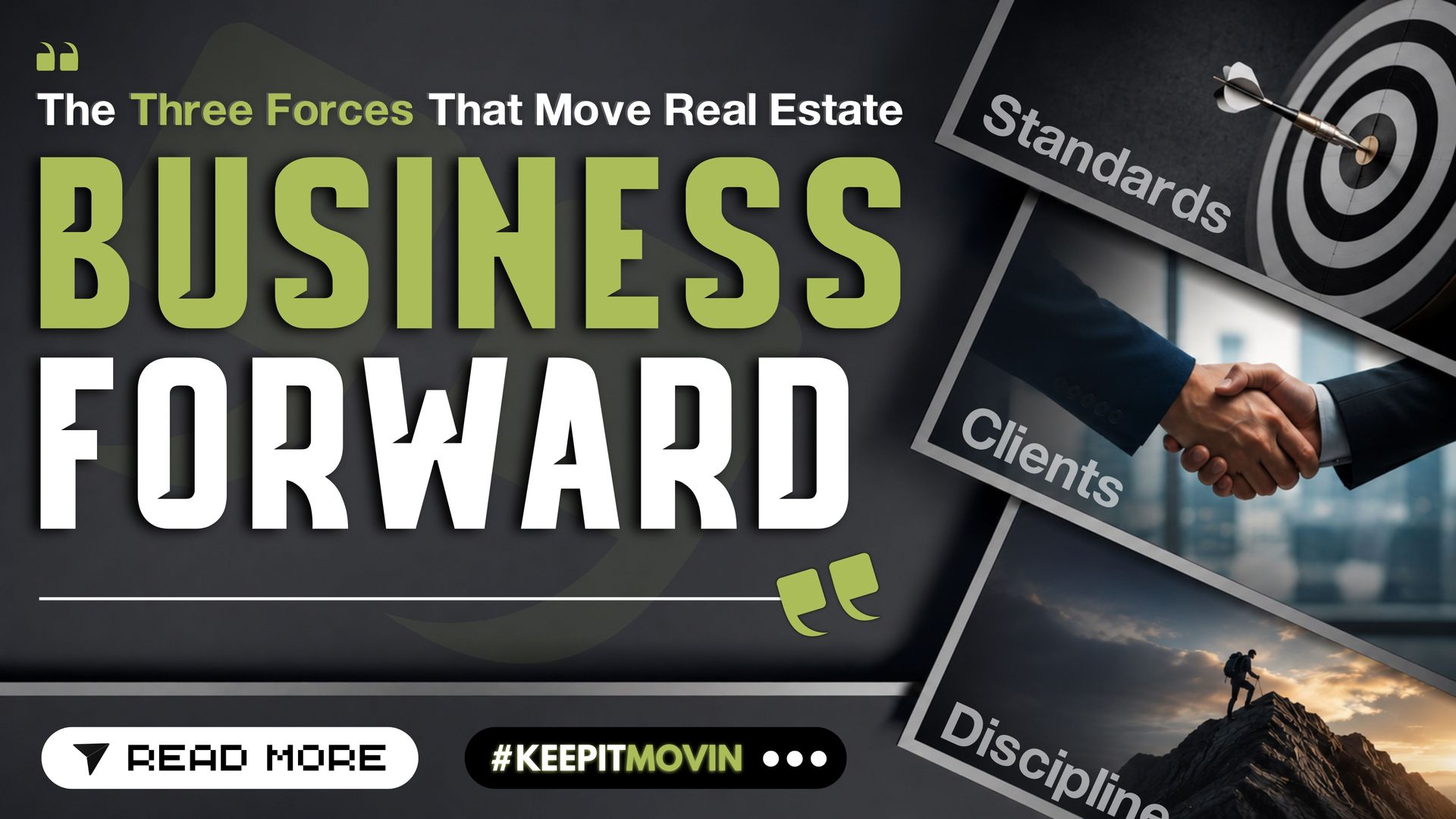
Standards, Clients, and Discipline: The Three Forces That Move a Real Estate Business Forward
There is a dangerous point in every real estate business when being busy begins to feel like making progress.
The calendar is full. Calls are being made. Marketing ideas are constantly being created. Open houses are scheduled, leads are entering the database, and new tasks appear every day. Yet appointments remain inconsistent, follow-up continues to slip, and the pipeline never feels as strong as it should.
The problem is rarely a lack of effort.
Real estate business growth depends on three forces working together: strong professional standards, meaningful client relationships, and consistent discipline.
Standards determine how the business operates. Clients give every call, appointment, follow-up, and marketing effort a clear purpose. Discipline keeps the right actions moving when motivation fades, and immediate results are difficult to see. When these three forces are aligned, a real estate business becomes more reliable, more productive, and easier to grow.
Professional Standards Create the Foundation
A successful real estate business begins with a clear professional standard. A standard is not simply a goal written at the beginning of the year. It is the level of performance expected every day, including the days when energy is low, the market feels slow, and results are uncertain. Professional standards influence how quickly new leads receive a response, how carefully the CRM is maintained, how prepared every appointment feels, and how consistently clients receive updates.
Without clear standards, important responsibilities become optional. Follow-up is delayed. Client communication becomes inconsistent. The database becomes disorganized. Promises are forgotten, and valuable opportunities are lost. Strong standards create reliability. Every real estate business should establish clear expectations for:
- Responding to new leads
- Updating the CRM
- Following up with prospects
- Communicating with active clients
- Preparing for consultations and showings
- Tracking appointments and conversions
- Reviewing the real estate pipeline
- Maintaining relationships after closing
These standards do not require perfection. They require consistency.
Define the Clients You Are Best Equipped to Serve
A real estate business cannot grow without clients, but effective client acquisition begins with clarity. Trying to market to everyone usually produces a message that connects deeply with no one. An ideal client should not be described simply as someone who wants to buy or sell a home. A stronger client profile identifies a specific person, a clear concern, and a meaningful goal. That person may be:
- A first-time buyer who needs education and reassurance
- A growing family that needs more space
- A homeowner preparing to downsize
- A renter who wants to begin building equity
- A professional relocating for work
- A property owner navigating a major life change
- An investor searching for a practical opportunity
The clearer the client becomes, the more focused the marketing becomes. Content can answer the questions that the person is already asking. Prospecting can happen in places where that person is more likely to be found. Conversations can focus on the concerns that matter most to the decision. Real estate marketing becomes more effective when people feel the message was created specifically for their situation.
Real Estate Decisions Are Often Driven by Life
Interest rates, inventory, and economic conditions influence the housing market, but life is often the real reason people decide to move. Families grow. Careers change. Relationships shift. Children leave home. Rent increases. New opportunities appear. Aging parents need support. Financial goals evolve. These changes do not always wait for perfect market conditions. Motivated buyers and sellers can be found in nearly every market. They may not be waiting for lower interest rates or more inventory. Many are waiting for clear information, a practical plan, and a trusted professional who can explain their options. Real estate conversations should therefore begin with the client’s life, not only with market statistics. Helpful questions include:
- What is no longer working about the current home?
- What would moving make possible?
- What monthly payment would feel manageable?
- What could be the long-term cost of waiting?
- What would the next home need to provide?
- What concerns are preventing a decision?
These questions create a more meaningful conversation. The objective is not to pressure someone into buying or selling. It is to help that person evaluate the situation and decide whether a move supports their goals.
The Cost of Avoiding the Work
Every real estate professional faces two forms of discomfort. The first is the discomfort of discipline. It includes making calls, hearing no, appearing on camera, asking for an appointment, organizing the database, and completing follow-up without an immediate reward. The second is the discomfort of regret. It includes looking back at leads that were never contacted, clients who chose another professional, content that was never published, and opportunities that disappeared because action came too late. The discomfort of discipline is temporary. The cost of inconsistency can remain much longer. Sustainable real estate business growth requires accepting the small daily discomfort needed to prevent the larger consequences of missed opportunities.
Five Practices That Move a Real Estate Business Forward
1. Operate With Honesty
Business growth begins with an accurate view of current performance. Weak follow-up, an outdated database, inconsistent marketing, or low prospecting activity must be acknowledged before it can be corrected.
2. Keep Every Commitment
Trust is built through completed promises. This applies to commitments made to clients, colleagues, and the business itself. Every promise kept strengthens professional confidence and credibility.
3. Track Meaningful Activity
Conversations, follow-ups, appointments, referrals, listings, offers, and closed transactions should be measured. Tracking reveals which actions create progress and which activities merely create the appearance of productivity.
4. Focus on Genuine Client Needs
Marketing should address real concerns, questions, and life changes. Useful information creates stronger relationships than generic promotional content.
5. Act Before Confidence Arrives
Confidence often develops after action. The call must be made, the post must be published, and the appointment must be requested before everything feels comfortable.
Conclusion
A real estate business does not move forward through motivation alone. It moves forward when professional standards guide daily decisions, genuine client relationships create opportunities, and discipline keeps the essential work moving long enough to produce results. Standards create consistency. Clients create direction. Discipline creates momentum. The next transaction may begin with a phone call, an open house conversation, a follow-up message, a useful market update, or a relationship maintained over time. Those opportunities become more likely when the business is prepared to recognize and act on them. Raise the standard for how the business operates. Build stronger relationships with people who need guidance. Complete the important work even when motivation is low.
Real estate business growth is rarely created by one dramatic decision. It is built through standards upheld, clients served, and disciplined actions repeated until the results reflect the business being pursued.
Join Our COmmunity
Behind every great achievement, there's a community.
Read our story and become part of it.

Our Offices
Private Offices • Dedicated Desks • Meeting Rooms

Our Leadership
The Team Dedicated To Your Success

Why EXP?
Learn why #TeamFast choose to partner with eXp Realty.

Our Toolbox
See all the tools #TeamFast uses.