Stop Being Busy. Start Being Dangerous.
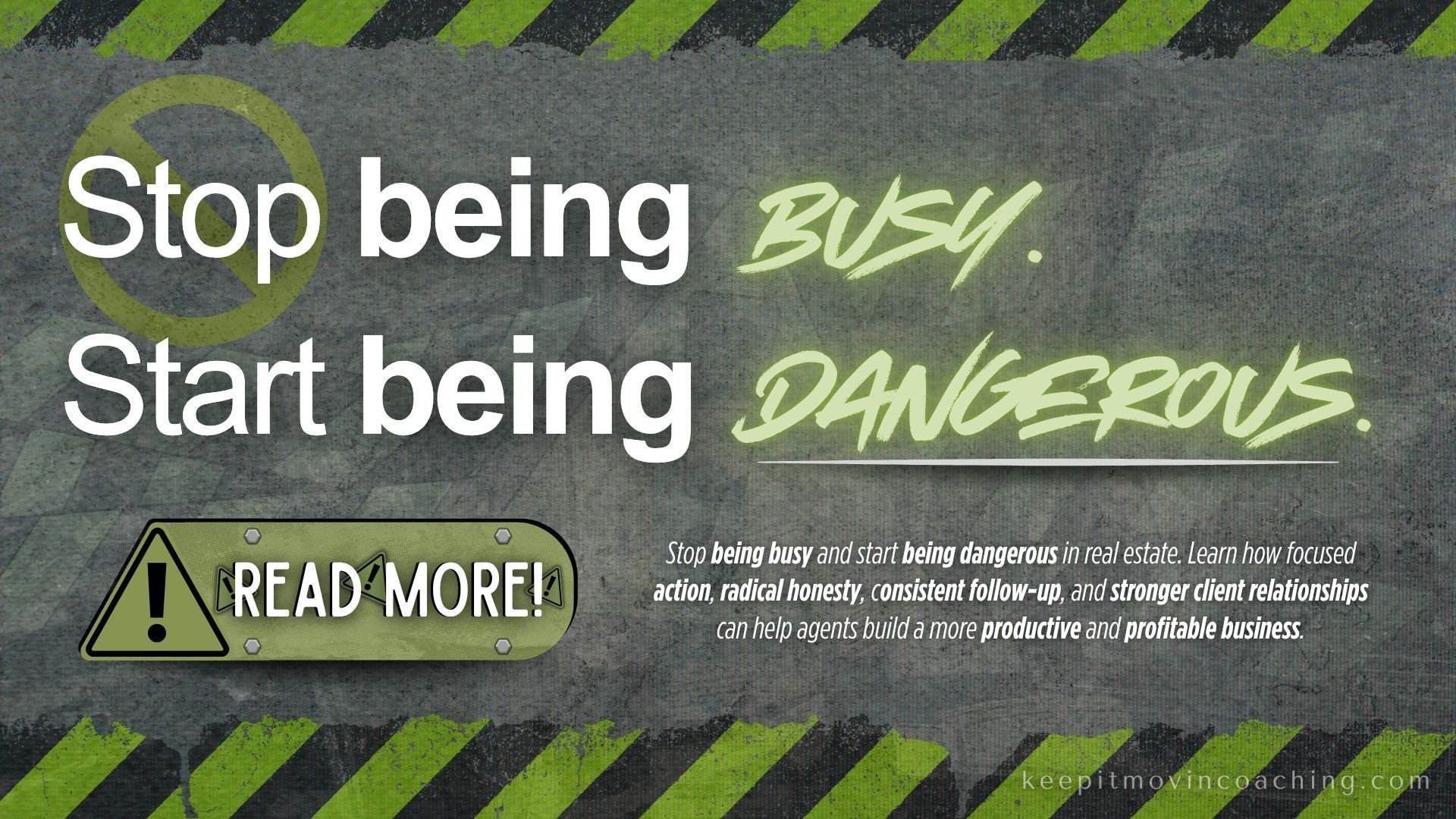
There is a version of real estate that looks productive on the outside and quietly fails on the inside. The phone is active. The calendar is full. Conversations are happening. From a distance, it appears like momentum. It appears like progress. It even feels like progress at the end of a long day. But results tell a different story. No meaningful pipeline growth. No consistent closings. No real control over where the next deal is coming from. This is the trap many real estate professionals never see clearly. They are not stuck because they are lazy. They are stuck because they are busy. Being busy keeps you occupied. Being busy keeps you comfortable. Busy gives you just enough movement to avoid asking harder questions about what is actually working and what is not. And in real estate, that kind of movement is dangerous for the wrong reasons.
Because while one agent is staying busy, another is operating with precision. Someone else is following up. Someone else is converting the very opportunities that were left unattended. At some point, the standard has to change. Not more effort. Not more tools. Not enough time. A higher level of honesty. A sharper level of focus. A stronger commitment to operate with intention instead of motion. That is where the shift happens. That is where being busy stops, and being dangerous begins.
Busy Does Not Mean Productive
In real estate, being busy can easily become a disguise for being unfocused. There are emails to answer, posts to create, meetings to attend, leads to check, and systems to manage. All of it may feel necessary, but not all of it creates movement toward a signed contract, a stronger pipeline, or a more predictable business. The real question is not, “Did I work today?” The real question is, “Did I do the work that moves the business forward?” A productive real estate business is not built on random activity. It is built on focused, consistent action that creates measurable results.
The First Step Is Radical Honesty
To stop being busy and start being dangerous, real estate professionals must begin with honesty. Not soft honesty. Not the kind that makes excuses. But the kind that looks directly at the business and asks what is truly happening. If nothing changed today, would there be enough active opportunities to close deals in the next 30 to 60 days? If the answer is unclear, the pipeline is not as strong as it needs to be. Most real estate challenges come down to one of three core problems:
- Lead Generation Problem
There are not enough new opportunities entering the business because prospecting is inconsistent. - Conversation Problem
Conversations are happening, but they are not deep enough to build trust, create urgency, or move people forward. - Conversion Problem
Strong conversations are taking place, but there is no clear next step, follow-up plan, or commitment.
Each problem requires a different solution. But nothing improves until the real problem is identified. That is what dangerous agents do differently. They stop guessing. They diagnose.
Dangerous Agents Know What to Eliminate
Growth in real estate is not always about adding more. Sometimes, the fastest way to improve is to remove what is stealing time, focus, and energy. Before adding another strategy, tool, or system, it is worth asking:
- What tasks are filling the day but producing no results?
- What activities look productive but do not generate business?
- What distractions are being mistaken for strategy?
- What can be removed this week without hurting the business?
The goal is not to be busy from morning to night. The goal is to protect the time and energy needed for high-value activities: prospecting, following up, building trust, strengthening relationships, and closing the loop with serious opportunities. In real estate, focus is not a luxury. It is a competitive advantage.
Follow-Up Is Where the Business Is Won
Many opportunities are not lost because the client said no. They are lost because the follow-up stopped. A lead comes in. A conversation happens. Interest is shown. Then the communication becomes inconsistent. Days pass. Weeks pass. The opportunity grows cold. Eventually, that person works with someone else. Not always because the other agent was better, but because the other agent stayed present. This is one of the biggest gaps in real estate. Agents work hard to generate leads, but fail to create a consistent follow-up system that keeps those leads moving forward. A strong follow-up strategy should include:
- Cold Leads
Reconnect with context and value. Do not over-apologize for the gap. Show up with relevance and restart the conversation. - Nurture Leads
Stay visible through market updates, neighborhood insights, property opportunities, and helpful guidance. - Closed Clients
Continue the relationship after closing. Share home value updates, equity insights, and market positioning information.
Follow-up does not bother people. Done correctly, it is a service. It is the reminder that someone is paying attention, watching the market, and ready to help when the timing is right.
Closed Clients Are Not Past Clients
One of the most overlooked opportunities in real estate is the relationship after the transaction. Many agents spend so much energy trying to find new business that they neglect the people who already know them, already trust them, and have already completed a major transaction with them. Closed clients should not be treated as finished business. They should be treated as long-term relationships. A dangerous real estate professional continues to provide value after the sale by helping clients understand:
- How their property value may have changed
- What their equity position could mean
- When it may make sense to sell, refinance, invest, or reposition
- How local market conditions affect their long-term goals
This shifts the role from salesperson to trusted advisor. And trusted advisors do not have to chase as hard, because relationships begin to produce repeat business, referrals, and long-term loyalty.
The Difference Is Precision
The dangerous agent is not reckless. The dangerous agent is precise. They know where their business stands. They know what needs attention. They know which leads require follow-up. They know which conversations need a next step. That kind of precision creates confidence. Instead of reacting to the day, they control the day. Instead of waiting for opportunity, they create it. Instead of hoping clients remember them, they stay consistently present. This is how real estate professionals build a business that does not depend on luck. It depends on structure, discipline, and action.
Conclusion
Real estate does not reward movement. It rewards meaningful movement. Being busy may fill a calendar, but it does not guarantee closings. It may create the feeling of progress, but it does not automatically build a stronger pipeline, deeper client relationships, or a more predictable business. To stop being busy and start being dangerous, real estate professionals must operate with more honesty, more focus, and more consistent follow-through. That means identifying the real bottleneck, eliminating low-value activity, strengthening follow-up, and treating every relationship as an opportunity to serve at a higher level. The market will always change. Conditions will always shift. Competition will always exist. But the agents who win are the ones who stop hiding behind activity and start operating with precision. That is the real shift. That is the advantage. That is what it means to stop being busy and start being dangerous.
Join Our COmmunity
Behind every great achievement, there's a community.
Read our story and become part of it.

Our Offices
Private Offices • Dedicated Desks • Meeting Rooms

Our Leadership
The Team Dedicated To Your Success
Why EXP?
Learn why #TeamFast choose to partner with eXp Realty.

Our Toolbox
See all the tools #TeamFast uses.