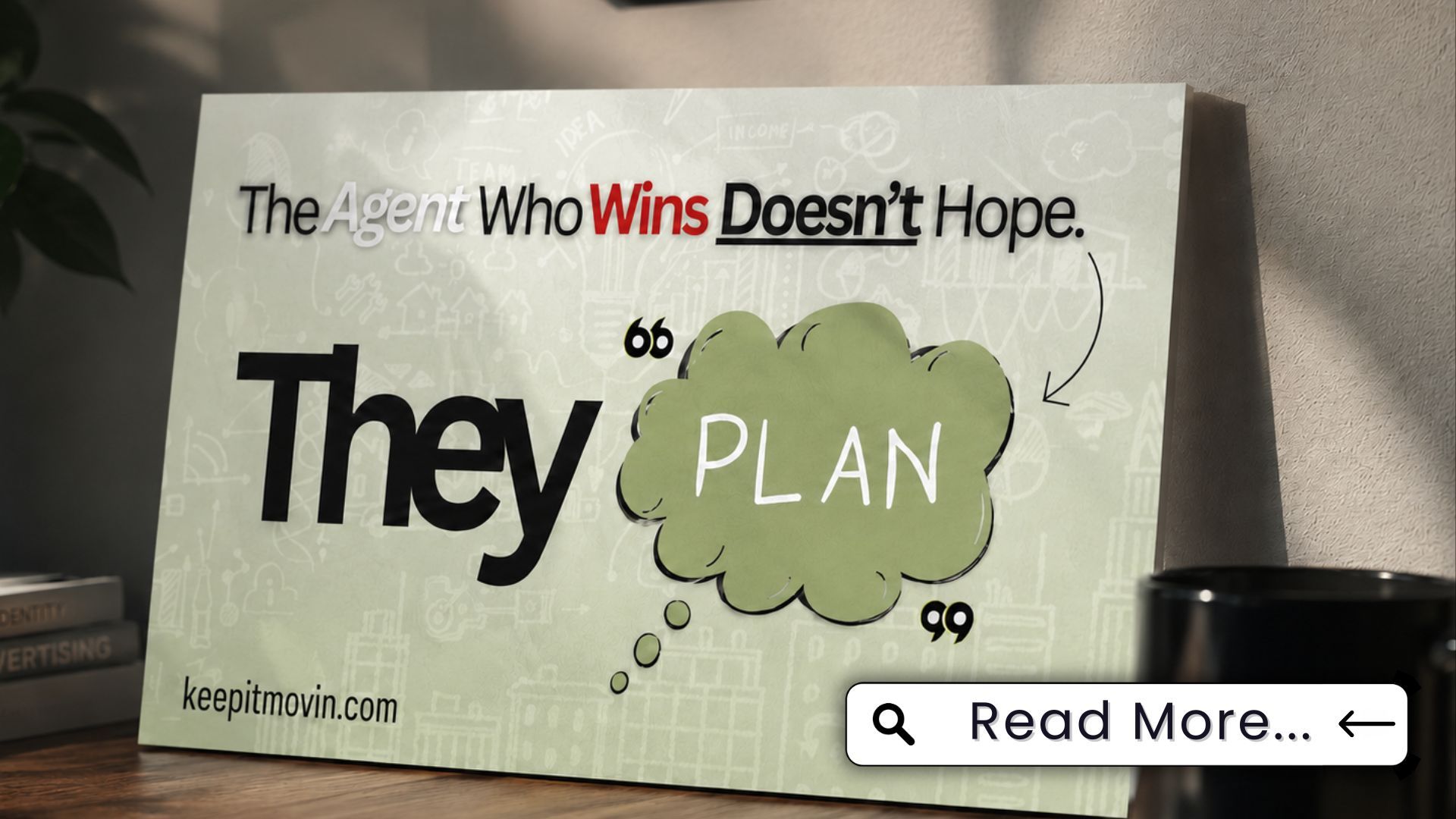
The Agent Who Wins Doesn’t Hope. They Plan.
There is a dangerous pattern happening in real estate right now. A lot of professionals look busy. Very few are actually positioned to win. Calendars are full, but pipelines are inconsistent. Content is being posted, but trust is not being built. Hours are being worked, but the right conversations are not happening. Behind the scenes, too many real estate agents are hoping the next market shift, the next lead, or the next referral will finally create momentum. But real estate has never rewarded hope for very long. It rewards preparation. The agents who consistently grow do not wake up guessing. They do not rely on motivation that disappears when the week gets difficult. They build calendars designed around production, prepare answers before clients ask questions, and create personal brands that build trust before the first conversation ever happens.
Because in the real estate business, the professionals who win are rarely the ones reacting emotionally to the market. They are the ones prepared for it before everyone else.
Your Real Estate Calendar Is Telling the Truth
Most real estate professionals say they want more listings, more buyers, more referrals, and more consistent income. But the calendar usually tells a different story. A calendar filled with distractions will not create a serious real estate pipeline. A week built around reaction will not produce predictable results. A business that depends on “when there is time” will always lose to a business built around non-negotiable priorities. In real estate, the calendar is not just a schedule. It is a reflection of standards. Lead generation, follow-up, CRM updates, buyer and seller appointments, open house preparation, local market research, content creation, past client outreach, and business planning all need a place on the calendar before the week gets noisy. Without structure, the business becomes emotional. One good lead creates excitement. One slow week creates panic. One busy day becomes an excuse to avoid the work that actually creates future income. Planning removes that chaos.
Real Estate Production Comes From Repetition
Real estate success is often made to sound complicated. It is not. Most of the business comes down to simple actions repeated with discipline. Real estate conversations, consistent follow-up, booked appointments, local housing market study, useful content, client relationships, CRM tracking, and database visibility are the activities that move the business forward. The problem is not that agents do not know what to do. The problem is that too many stop doing it long enough for it to work. A strong real estate business is built through repetition. Showing up once is easy. Showing up consistently is where the separation happens.
Buyers and Sellers Are Looking for Certainty
Today’s real estate consumers are more informed, more cautious, and more selective than ever. Before they reach out, they are searching online. They are comparing agents. They are reading reviews. They are watching videos. They are asking questions about interest rates, home pricing, affordability, commissions, timing, inventory, and strategy. They are not looking for noise. They are looking for clarity. Homebuyers want to know if now is a good time to buy, whether they should wait for mortgage rates to drop, how much they need for a down payment, how much home they can realistically afford, and whether buying now makes more sense than continuing to rent.
Home sellers want to know what their home is worth, whether they should sell now or wait, which upgrades actually increase home value, how to price correctly, and what strategy will attract serious buyers. The real estate agent who can answer these questions clearly earns trust faster. The agent who hesitates creates doubt.
A Strong Real Estate Brand Builds Trust Before the First Conversation
Every real estate professional already has a brand. The only question is whether that brand is working for the business or quietly weakening it. When someone searches online, what do they find? Do they see current information, strong reviews, useful content, clear positioning, and an active presence? Or do they see outdated bios, inconsistent messaging, old links, missing testimonials, and a digital presence that does not reflect the level of service being offered? A strong real estate brand should communicate clear positioning, updated online presence, strong client testimonials, helpful local market content, consistent messaging, professional presentation, authentic communication, and proof of real estate expertise. In real estate, trust starts before the first phone call. A strong brand does not need to be loud. It needs to be clear, consistent, and credible.
Planning Separates Successful Real Estate Agents From
Everyone Else
Hope says, “Something will come in.” Planning says, “Here is what will be done today to create the next opportunity.” That difference matters. The housing market will always change. Mortgage rates will move. Inventory will shift. Buyers will hesitate. Sellers will adjust. Competition will increase. Consumer behavior will evolve. The real estate professional who relies on hope gets pulled around by all of it. The professional who plans has a foundation. Planning turns vague goals into scheduled action. It turns market uncertainty into preparation. It turns motivation into discipline. It turns busy work into productive work. It turns random content into strategic visibility. It turns weak answers into trusted guidance. A goal without a calendar is just a wish. A brand without consistency is just decoration. Expertise without preparation is just potential.
The Three Assets Every Real Estate Business Needs
A real estate business becomes stronger when it is built on assets that compound over time. The first asset is a planned calendar. A strong real estate calendar protects the activities that create income and makes lead generation, follow-up, appointments, content, and business development non-negotiable. The second asset is a clear real estate brand. A clear brand helps the market understand who the professional is, what they stand for, and why they can be trusted. The third asset is sharp market answers. Sharp answers turn confusion into confidence and help buyers and sellers feel guided, informed, and ready to make decisions. These three assets work together. The calendar creates action. The brand creates trust. The answers create confidence. When those pieces are aligned, the business becomes far less dependent on luck.
Conclusion
The agent who wins does not build a real estate business on hope. They built it on a plan. They know what belongs on the calendar. They understand which activities create real momentum. They prepare for the questions buyers and sellers are already asking. They build a brand that creates trust before the first conversation. And they repeat the right actions long enough for results to compound. Real estate will always change. Markets shift. Rates move. Inventory rises and falls. Consumer confidence comes and goes. But planning gives an agent something stronger than perfect conditions. It gives them direction. That is why the professionals who win are not waiting for the market to rescue them. They are building the business they want through structure, preparation, and consistent execution. Because in real estate, hope may start the dream. But planning is what turns it into production.
Join Our COmmunity
Behind every great achievement, there's a community.
Read our story and become part of it.

Our Offices
Private Offices • Dedicated Desks • Meeting Rooms

Our Leadership
The Team Dedicated To Your Success

Why EXP?
Learn why #TeamFast choose to partner with eXp Realty.

Our Toolbox
See all the tools #TeamFast uses.