They Will Choose You Before You Say a Word
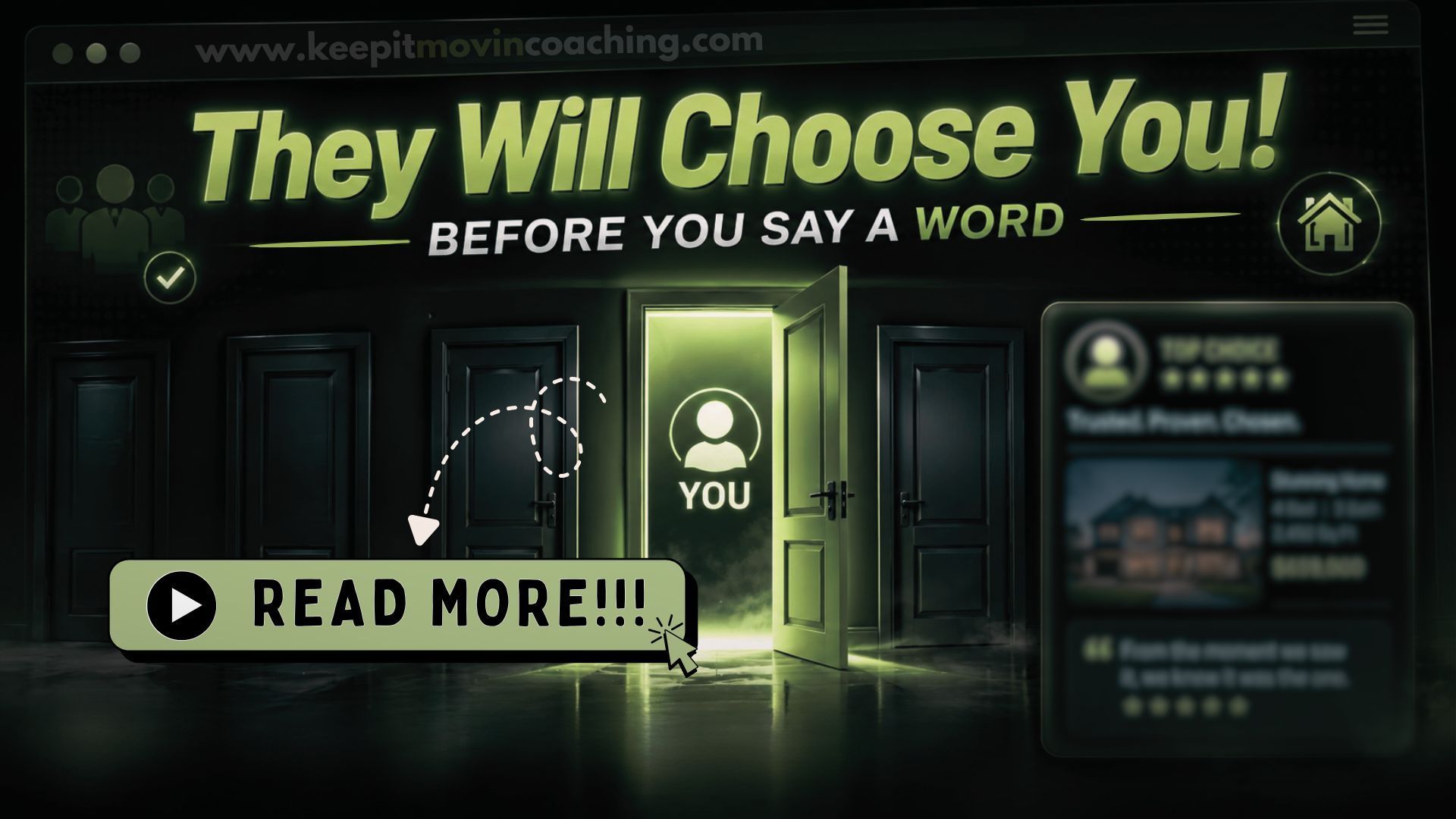
Here is the part most real estate professionals do not think about enough: a buyer or seller may already be deciding whether they trust you before you ever get on the phone. Before the consultation, before the showing, before the listing appointment, and before the first handshake, they may have already searched your name, scanned your online profile, read your reviews, looked at your social media, checked your website, and formed an opinion.
And now, with AI search becoming part of everyday decision-making, that process is moving even faster. A potential client can ask an AI tool who to trust in a local market, and the answer may be shaped by what already exists online: your bio, reviews, website, content, business profile, market updates, local presence, and client proof.
That means your reputation is no longer built only in person. It is being built online before you even know someone is looking.
The real question is not, “Are people searching?”
The real question is: when they search, what do they find?
Real Estate Visibility Has Changed
For years, SEO was the main focus. Real estate professionals were told to build a website, collect reviews, use local keywords, and create content that helped them appear in search results. That still matters, but it is no longer the full picture. Today, people are not only using search engines. They are using answer engines. Instead of scrolling through pages of results, they may ask direct questions like:
- Who is trusted in this local real estate market?
- Who understands buyers and sellers in this area?
- Who has strong local market knowledge?
- Who is active, visible, and credible in this community?
- Who should I call before making a move?
This is where AEO, or Answer Engine Optimization, becomes important. SEO helps search engines find you. AEO helps engines understand you. Together, they shape whether your name, brand, and expertise are clear enough to be recognized, trusted, and recommended. If your online presence is outdated, scattered, vague, or too generic, you may be making it harder for both people and algorithms to understand why you are worth choosing.
Being Good Is Not Enough If People Cannot See It
A real estate professional can be skilled, hardworking, and committed, but if the online proof is weak, the market may never fully see that value. That is the danger. You can be great with clients and still look invisible online. You can know your market deeply and still have content that does not show it. You can deliver strong results and still have profiles that feel generic, incomplete, or forgettable. The market cannot choose what it cannot clearly see. A strong online presence should answer these questions quickly:
- Where do you serve?
- Who do you help?
- What problems do you solve?
- What makes your guidance valuable?
- What proof shows that people trust you?
- Why should someone choose you over another professional?
Generic visibility does not create trust. Specific visibility does. A profile that simply says, “Helping buyers and sellers achieve their real estate goals,” may sound fine, but it does not say enough. It does not tell people where you work, what you specialize in, or why you are the right choice. Specificity builds authority. Authority builds trust.
Trust creates opportunity.
The Visibility Gaps That Quietly Cost Opportunities
Most real estate visibility problems are not dramatic. They are small gaps that build up over time until the entire online presence feels unclear.
Here are the common gaps that can weaken trust:
- Bios that do not mention specific cities, neighborhoods, or service areas.
- Business profiles that are incomplete, outdated, or inactive.
- Social media profiles that do not clearly explain the market being served.
- Websites with little local content or weak keyword structure.
- Reviews that are outdated or too limited.
- Captions with no local keywords, neighborhood references, or searchable context.
- Blog posts or market updates that do not connect back to the professional’s authority.
- Inconsistent branding across different platforms.
- Content that shows personality but does not build expertise.
These details matter because search engines, answer engines, and consumers all look for consistency. If every platform tells a different story, the market has to work harder to understand the value. And when people have to work too hard to trust you, they usually move on.
Content Is No Longer Optional
Content is not just something to post when there is extra time. It is one of the strongest ways to build visibility, trust, and local authority. Every market update, neighborhood guide, buyer tip, seller checklist, short video, carousel, newsletter, or community post gives people another reason to believe you understand the market. Good content does not just say, “I am active.” It says:
- I understand what is happening locally.
- I know what buyers and sellers are worried about.
- I can explain the market clearly.
- I pay attention to the community.
- I can help people make better decisions.
The best part is that one strong idea can become several pieces of content. A newsletter can become a blog post. A blog post can become a carousel. A carousel can become a short video. A market update can become an email. A community highlight can become a conversation starter. You do not need to create from scratch every day. You need a system that makes one good idea work harder.
Four Types of Content That Build Authority
A strong real estate content strategy should not feel random. It should create recognition, trust, and connection.
The best strategy usually includes four types of content:
1. Entertainment
This is the content that makes people stop scrolling. It can be relatable, human, light, or personality-driven. People want to know there is a real person behind the professional service.
2. Education
This is where trust starts to grow. Educational content helps buyers, sellers, and homeowners understand the market, avoid mistakes, prepare better, and make smarter decisions.
3. Community
This is how local authority becomes visible. Restaurants, events, schools, parks, small businesses, neighborhood updates, and city changes all help show that you are connected to the area, not just working in it.
4. Opinion
This is where differentiation happens. Instead of repeating market headlines, explain what they actually mean. Take a clear, useful position. Help people think more clearly.
People do not just follow information. They follow clarity.
The Calendar Tells the Truth
A real estate business does not grow because the goal sounds good. It grows because the right actions are scheduled, protected, and repeated. The calendar reveals the standard. If prospecting is not scheduled, it is probably not happening consistently. If follow-up is not blocked, leads are probably slipping through the cracks. If content has no place in the week, visibility will always feel rushed. If the database is not being worked on, relationships are being left untouched. A strong real estate calendar should include:
- Weekly planning.
- Daily prospecting.
- Lead follow-up.
- Database management.
- Appointment preparation.
- Open house preparation.
- Content creation.
- Market research.
- Client care.
- A time block for unexpected tasks.
The strongest schedules are not built around motivation. They are built around discipline. Motivation changes. Standards hold.
Busy Work Is Not Business Growth
One of the easiest traps in real estate is feeling productive without actually creating opportunities. A full day does not always mean a strong business. It is possible to spend hours checking email, adjusting graphics, organizing files, researching tools, scrolling online, and planning future ideas without doing the work that creates revenue. Business growth usually comes from simple, direct actions:
- Make the calls.
- Send the follow-ups.
- Host the open house.
- Update the profile.
- Ask for the review.
- Create the market content.
- Work the database.
- Schedule the appointment.
- Serve the client well.
The work is not always complicated. It is usually just avoided. Calls create conversations. Conversations create appointments. Appointments create opportunities. Opportunities create closings. Closings create relationships. Relationships create referrals. That is how momentum is built.
Conclusion
The real estate professionals who win today are not waiting to be discovered. They are building proof. They are creating visibility. They are showing up consistently. They are following up. They are caring after the close. They are making it easier for people to trust them before the first conversation ever begins. That is the real advantage. Not louder marketing. Not random posting. Not hoping the market changes. The advantage belongs to the professional who understands that every profile, post, review, follow-up, and client touchpoint is part of the same reputation. People may choose you before you ever say a word. The question is whether your online presence, consistency, and client experience are making that decision easy. Start with one move. Update the bio. Strengthen the business profile. Post the local insight. Call the past client. Ask for the review. Block the prospecting time. Send the homeowner update. The path to being chosen is not built in one dramatic move. It is built through the consistent actions that make trust visible before the conversation begins. The market is already watching. Make sure it knows exactly why you are worth choosing.
Join Our COmmunity
Behind every great achievement, there's a community.
Read our story and become part of it.

Our Offices
Private Offices • Dedicated Desks • Meeting Rooms
Our Leadership
The Team Dedicated To Your Success

Why EXP?
Learn why #TeamFast choose to partner with eXp Realty.

Our Toolbox
See all the tools #TeamFast uses.