Why Real Estate Growth Depends on More Than Closing Deals
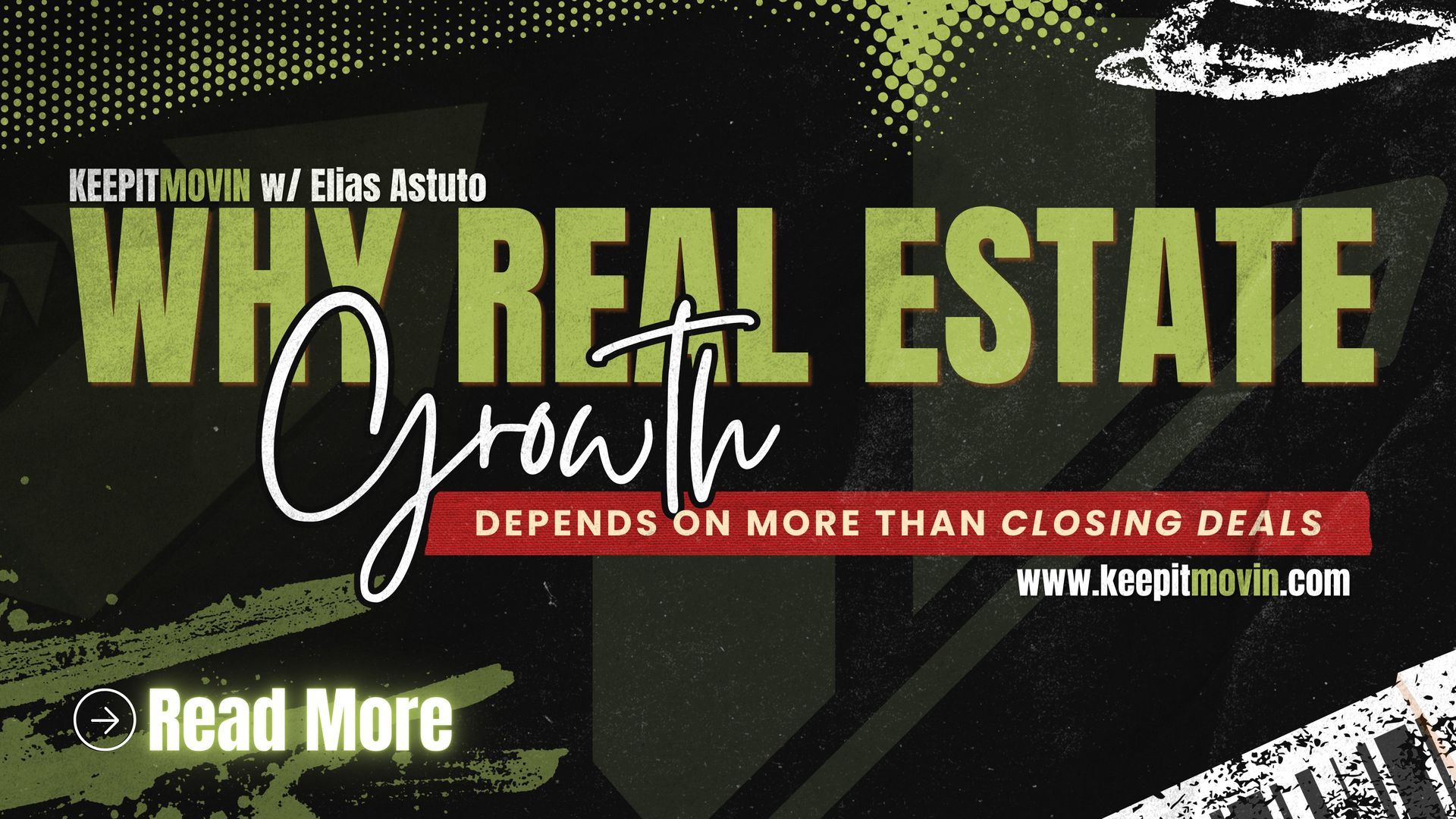
Real estate growth is often measured by what can be counted immediately: leads generated, appointments booked, offers written, and transactions closed. Those numbers matter, but they do not reveal whether the business is becoming stronger or simply staying busy.
The businesses that continue growing through changing markets are built on more than production. They create relationships that generate future opportunities, maintain disciplined standards when results slow down, and take consistent action before there is any guarantee of a reward. When those foundations are missing, even a successful month can be followed by another desperate search for momentum.
The Relationship Should Not End at Closing
Many real estate professionals deliver competent service during the transaction and then gradually disappear. That approach leaves enormous value behind. A client who felt protected, understood, and remembered can become more than a completed transaction. That person can become a future buyer or seller, a source of introductions, and a trusted advocate within an entire family or professional network. The first step is recognizing that clients do not only remember what happened. They remember how the process made them feel. Fear often appears at predictable stages:
- After the earnest money deposit is submitted
- Before the inspection
- During contingency decisions
- While financing is being finalized
- Before signing and closing
These moments require more than routine updates. Clients need to understand what happened, why it matters, what protections remain, and what happens next.
A short personal video can often provide more reassurance than another long email. It allows clients to hear confidence and feel that someone is actively guiding them through the decision. The same principle should continue after closing. A practical client-care schedule may include:
- A personal check-in within the first month
- A useful homeownership resource or thoughtful gift
- A message on the first closing anniversary
- A property value or equity review every six months
- Genuine interaction around personal and professional milestones
None of these touches should feel like disguised referral requests. The objective is to remain useful and present long enough for trust to deepen naturally.
Do Not Automate Away the Human Experience
Automation can improve consistency, but it can also make a business feel distant. Scheduled messages, transaction videos, anniversary reminders, and email sequences are valuable when they carry predictable information. They become harmful when they replace conversations during emotionally important moments. A simple rule can protect the client experience: Automate information. Personalize emotion. Use automation for reminders, checklists, educational material, and routine updates. Use direct communication when clients face fear, conflict, disappointment, financial risk, or a major decision. The purpose of technology is not to remove people from the process. It is to create more time for the conversations that require genuine attention. Artificial intelligence can also strengthen the experience when used carefully. A recorded consultation can be transformed into a client debrief containing goals, timelines, responsibilities, key terms, and next steps. CRM notes can help produce more relevant follow-up. Transaction conversations can become clearer summaries. Frequently asked questions can become useful client resources. However, every output still requires review. Technology can organize information, but professional judgment must protect accuracy, privacy, and tone.
The Market Is Not the Only Thing Affecting Performance
Interest rates, inventory, competition, and client timing all influence results. They are real conditions, but they should not become permanent explanations for inactivity.
The stronger question is, "What is still within control?" Real estate professionals cannot control every market movement, but they can control the following:
- The number of conversations they start
- The quality of their follow-up
- How quickly they respond
- Whether their database is accurate
- How consistently they publish content
- How well they prepare for appointments
- Whether expectations are clearly communicated
- How they react when a deal falls apart
- Whether they ask for help before a problem grows
This is where mindset becomes practical. A strong mindset is not pretending that the market is easy. It is refusing to let difficult conditions lower the standards required for future growth. When business slows down, the first behaviors to disappear are often the ones that matter most. Follow-up is delayed. Content becomes inconsistent. Prospecting is avoided. Planning replaces execution. A temporary market problem then becomes a self-created activity problem.
Accountability Must Measure What Actually Happened
Being busy is not the same as building momentum. A calendar can be full while the pipeline remains weak. Research, preparation, and meetings can create the appearance of progress without producing conversations, appointments, or opportunities. Useful accountability focuses on evidence. At the end of each week, review:
- How many meaningful conversations took place?
- How many follow-ups were completed?
- How many appointments were scheduled?
- How many offers or listing opportunities were created?
- What content was published?
- Which client relationships were strengthened?
- What system was improved?
- What result came from the activity?
If there is nothing meaningful to report, that is not a reason for shame. It is information. Honest review makes it possible to adjust before a slow week becomes a slow month.
Coaching Can Reveal What Individual Effort Misses
Professionals can remain extremely busy while repeating the same weak habits. That is one reason group real estate coaching can be valuable. It creates a place where activity, communication, conversion, and follow-up can be examined more objectively. For example, a group may believe weak buyer conversion is caused entirely by rates or poor lead quality. A closer review may reveal that consultations begin with financial questions before enough trust has been established. Changing the sequence of the conversation can change the result. Instead of beginning with qualifications, the process can start by understanding:
- Why the move matters
- What has changed in the client’s life
- What has made the search difficult
- What concerns are delaying action
- What the ideal outcome looks like
The financial discussion still happens, but it occurs after the client feels understood. Group coaching makes these gaps easier to identify because participants can compare approaches, study results, and test stronger methods together. The value is not simply receiving another idea. The value is applying the idea, measuring what happened, and deciding whether it should become part of the business.
Team Coaching Creates One Standard Across the Organization
A team can have talented people and still deliver inconsistent service. One agent follows up immediately. Another allows opportunities to sit untouched. One team member communicates clearly throughout escrow. Another leaves clients uncertain. One publishes consistently, while others disappear whenever business becomes demanding.
Elite team coaching helps leadership turn individual strengths into shared standards. That work may include:
- Lead-response expectations
- Buyer and seller consultation quality
- Follow-up and database management
- Transaction communication
- Content accountability
- Prospecting activity
- Leadership habits
- Weekly performance reviews
The goal is not to remove individuality. The goal is to make excellent execution easier to recognize, teach, and repeat throughout the team. When everyone understands the standard, accountability becomes clearer and client experience becomes more consistent.
Three Actions That Can Change the Next Week
Real estate growth does not always require another platform, lead source, or complicated system.
Sometimes it begins with three deliberate actions.
Strengthen One Relationship
Contact a past or current client with something useful or personal. Do not begin by asking for a referral.
Improve One Point in the Client Journey
Choose a stressful transaction milestone and create a clearer message, video, guide, or phone script for it.
Complete One Avoided Action
Publish the content. Make the call. Send the follow-up. Write the letter. Review the database.
The action that has been postponed may carry more opportunity than another week of planning.
Conclusion: The Business Grows Where the Standard Holds
A sustainable real estate business is not built by one strong month. It is built by maintaining the relationship after the transaction, protecting the standard when conditions become difficult, and completing the actions that create future opportunities. When those areas are neglected, every month feels like another restart. When they are strengthened, the business begins to produce something more valuable than activity. It produces trust, repeatable performance, and momentum. The next opportunity may come from a past client, an old database note, a piece of content, a coaching conversation, or a follow-up that almost did not happen. The source may be unpredictable.
The standard that prepares the business to receive it should not be.
Join Our COmmunity
Behind every great achievement, there's a community.
Read our story and become part of it.

Our Offices
Private Offices • Dedicated Desks • Meeting Rooms

Our Leadership
The Team Dedicated To Your Success

Why EXP?
Learn why #TeamFast choose to partner with eXp Realty.

Our Toolbox
See all the tools #TeamFast uses.