Be Seen or Be Replaced: Winning in a Slow Real Estate Market
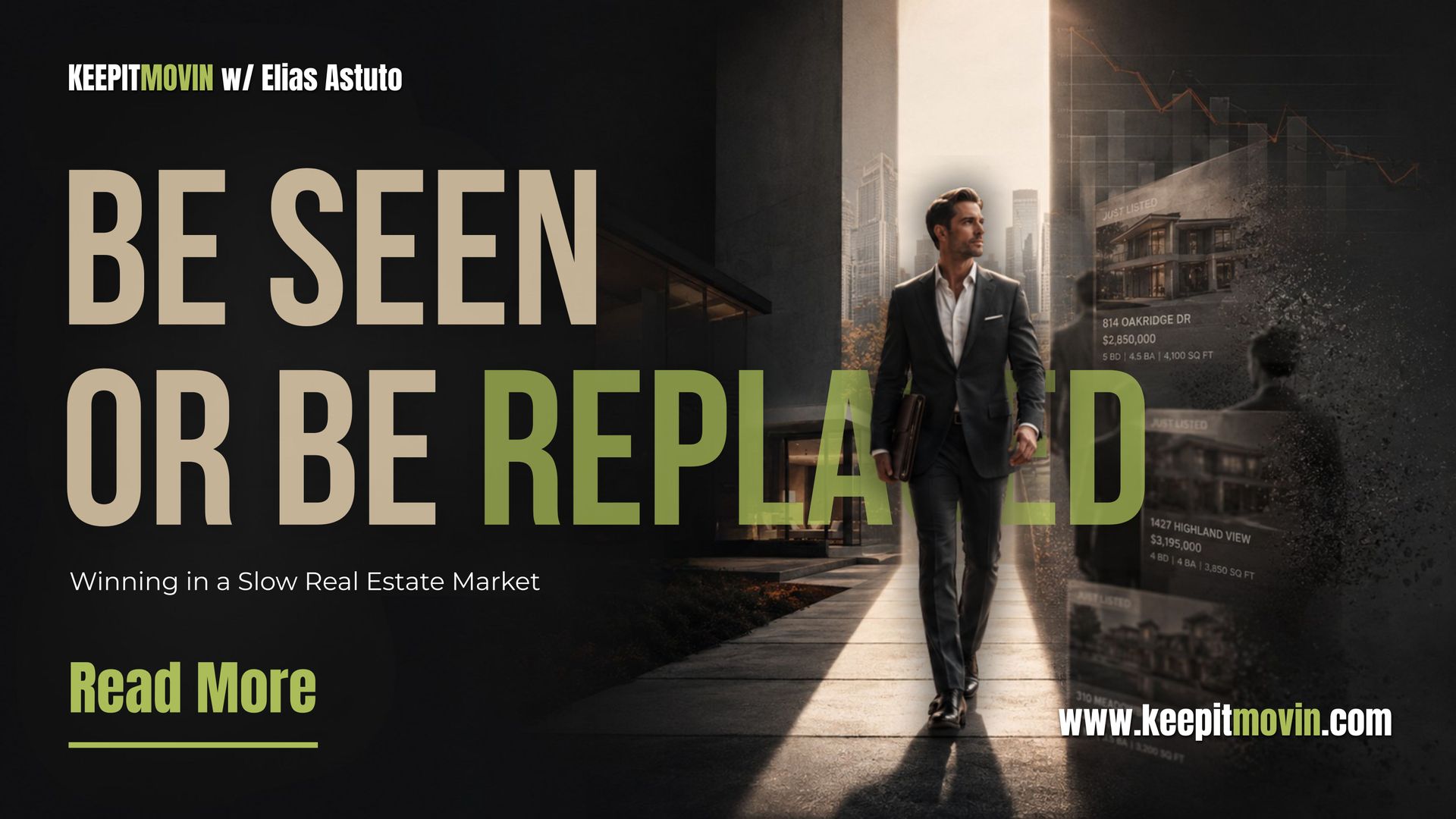
Two real estate agents can work in the same market, face the same mortgage rates, manage the same inventory challenges, and hear the same discouraging headlines. Yet one continues to grow while the other struggles to gain momentum. The difference is rarely luck. It is visibility, trust, market knowledge, and the discipline to remain present when other agents decide the market is too difficult. In a slower housing market, clients become more selective. They take longer to make decisions, research agents more carefully, and choose the professional they already recognize and trust. A slow market may reduce the number of transactions. Becoming forgettable can remove you from the opportunity entirely.
Trust Is the Currency That Builds a Real Estate Business
Real estate professionals are no longer competing primarily on access to information. Buyers and sellers can find listings, property estimates, neighborhood data, mortgage calculators, and market reports within seconds. Information is widely available. Interpretation is not. Clients still need someone who can explain what the numbers mean for their property, neighborhood, financial position, and timeline. They need guidance that goes beyond information and turns uncertainty into a confident decision. That is where trust becomes the advantage. Consumers do not automatically choose the agent who posts the most content or has the largest audience. They choose the professional who feels familiar, dependable, knowledgeable, and prepared. When a potential client finally contacts you, the relationship should not feel like it started that day. Your consistent communication, useful content, and visible market presence should have been building that relationship for months.
Would Your Database Think of You First?
Every real estate agent should ask one uncomfortable question: If someone in your database needed to buy or sell a home tomorrow, would they immediately think of you?
Not eventually. Not after searching online or asking several friends. Immediately. If the answer is no, the problem may not be your ability. It may be your presence. One generic email will not close that gap. Trust is built through repeated, relevant, and personal contact. Your database should regularly hear from you before you need a referral, listing appointment, or transaction. In a slow market, silence compounds. The longer you disappear, the easier it becomes for another agent to take your place.
What Trust-Building Looks Like in Real Estate
Strong real estate marketing is not simply about producing more content. It is about creating meaningful reasons for people to remember you.
Effective trust-building strategies include:
- Sending personalized messages based on previous client conversations
- Sharing market updates that explain how local changes affect homeowners
- Following up consistently without making every interaction a sales pitch
- Creating educational content that answers common buyer and seller concerns
- Demonstrating detailed knowledge of specific neighborhoods and communities
- Responding quickly when clients need direction
- Staying connected after closing instead of disappearing once the transaction ends
Personalization makes communication feel useful instead of automated. Instead of sending another broad message about mortgage rates, speak directly to a client’s concern. Explain how a rate change could affect their monthly payment, purchasing power, or decision to move. Specific communication creates relevance. Relevance builds familiarity. Familiarity builds trust.
The 2026 Real Estate Market Rewards Prepared Agents
The current housing market is not inactive. It is highly selective. In July 2026, existing-home sales were running at an annual rate of approximately 4.06 million transactions. The national median existing-home sales price remained at $431,400, while available inventory represented a 4.6-month supply, according to the National Association of Realtors. Those numbers tell an important story. Transaction volume remains limited, but property values have shown resilience. This means real estate professionals are competing for fewer opportunities in a market where buyers and sellers expect more expertise, stronger communication, and better service.
The market is not removing the need for agents. It is raising the standard for the agents consumers choose. This is the separation taking place across the industry. Agents who remain visible, informed, responsive, and connected are strengthening their position. Agents who stop following up or wait for conditions to improve are becoming easier to overlook.
Today’s Buyers and Sellers Are More Selective
Modern real estate consumers have more information than ever, but access to information has not made major financial decisions easier. In many cases, it has created more questions.
Today’s consumers are:
More Informed
Buyers and sellers can study listings, estimated values, comparable sales, and market trends before speaking with an agent. They do not need someone to repeat the data. They need someone who can explain it.
More Cautious
A real estate transaction may be the largest financial decision a family makes. Consumers are reviewing reputations, testimonials, digital presence, communication styles, and proven results before choosing representation. Reputation, honesty, and trustworthiness remain among the most important qualities sellers consider when selecting an agent. Referrals from friends, relatives, and neighbors also continue to play a major role, according to NAR research on what buyers and sellers want from agents.
Slower to Decide
Higher costs and greater uncertainty can lengthen the buyer or seller journey. One conversation may not lead to an immediate transaction.
The agent who follows up patiently and consistently remains part of the decision. The agent who disappears after one attempt is quickly replaced.
Local Market Knowledge Is Your Competitive Advantage
Technology can provide data. It cannot replace genuine local experience. A strong local real estate expert understands why one street performs differently from another, which neighborhoods are gaining attention, how local inventory is shifting, and what buyers are currently prioritizing. Market knowledge becomes valuable when an agent can use it to answer practical questions:
- Is now the right time for this client to move?
- How should a property be positioned against current competition?
- What does recent inventory growth mean for pricing?
- Where are buyers gaining negotiating power?
- Which local factors could affect the property’s long-term value?
Clients do not need a flood of statistics. They need clarity. The agent who can translate complicated market conditions into understandable guidance becomes difficult to replace.
How Real Estate Agents Win in a Slow Market
Winning in a slow real estate market requires consistent execution, not occasional bursts of motivation. Focus on five essential disciplines:
Work your existing database.
Contact the people who already know you. Ask thoughtful questions, provide useful information, and keep accurate notes about their goals.
Create locally relevant content.
Speak about specific neighborhoods, pricing trends, inventory changes, community developments, and buyer or seller opportunities.
Interpret the market.
Do not simply repeat headlines. Explain what current conditions mean for the people you serve.
Build a dependable follow-up system.
Create a clear schedule for calls, messages, emails, and personal check-ins. Consistency should not depend on how motivated you feel that day.
Be ready when opportunity appears.
Answer the phone. Respond with urgency. Provide direction. Many clients are won because one agent was prepared when another was unavailable.
The goal is not to chase every person constantly. The goal is to remain useful, recognizable, and trusted until the right moment arrives.
The Agents Who Stay Present Will Be Ready
A stronger market will not automatically rebuild a neglected database, repair an invisible brand, or restore relationships that were ignored. The agents who benefit most when activity increases will be the ones doing the work now. They are calling their contacts, studying their local market, improving their communication, creating valuable content, and strengthening relationships before a transaction is available. They understand that momentum is built before the results appear. The easy business may be gone, but that creates an opening for disciplined professionals. When the standard rises, inconsistent competitors begin to disappear. The agents who continue moving become more visible, more trusted, and better positioned to capture future opportunities.
Conclusion
A slow real estate market is not your greatest threat. Becoming forgettable is. Stay visible when others become quiet. Strengthen your database before you need it. Learn your local market deeply enough to provide interpretation instead of recycled information. Follow up with discipline, communicate with purpose, and become the agent clients trust before they are ready to move. Your next opportunity may already be watching, reading, and deciding whether you are the right person to call. Make sure they can find you. Give them a reason to remember you. Then keep showing up until trust turns into business.
Join Our COmmunity
Behind every great achievement, there's a community.
Read our story and become part of it.

Our Offices
Private Offices • Dedicated Desks • Meeting Rooms

Our Leadership
The Team Dedicated To Your Success
Why EXP?
Learn why #TeamFast choose to partner with eXp Realty.

Our Toolbox
See all the tools #TeamFast uses.