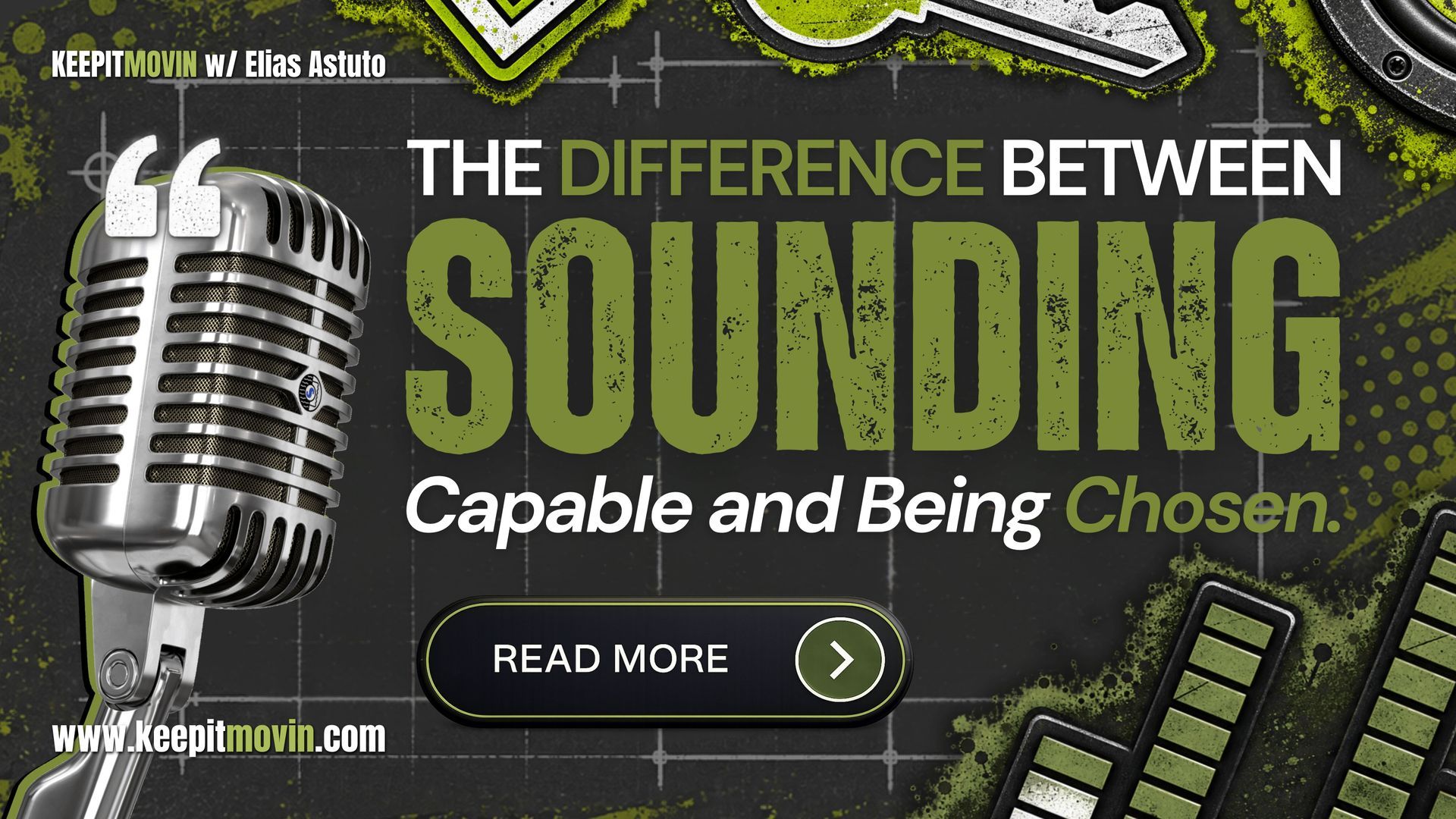
The Difference Between Sounding Capable and Being Chosen.
Real estate professionals spend years learning how to sound capable. They study market data, pricing strategies, contracts, negotiation, objection handling, presentations, scripts, and sales systems. All of that matters. But there is a difficult lesson many agents discover only after losing an opportunity they were qualified to win: competence alone does not always make a client choose you. A seller can be impressed by your comparable sales and still hesitate. A buyer can recognize your market knowledge and continue interviewing agents. A prospect can follow your content for months without ever reaching out. The missing piece is often not expertise. It is real estate client trust, the feeling that the person in front of them understands them, is genuinely interested in their outcome, and can be trusted when the decision becomes difficult.
The agents who consistently stand out learn to combine two forces. They demonstrate enough competence to create confidence and enough warmth to create connection. Then they support both with discipline, visibility, and follow-through. That combination changes how people experience an agent before a contract is ever signed.
Competence Gets Attention. Connection Creates Preference.
Consumers expect a real estate professional to understand the market. They expect accurate information, professional communication, strong negotiation, and a clear plan. Those qualities establish credibility, but credibility is only part of the decision. Clients are also evaluating something more personal. Do you listen before you recommend?
Do you appear genuinely interested in what matters to them? Do you remember the details they shared? Does the experience feel collaborative, or does it feel like a presentation being delivered at them? An agent can walk into a listing consultation with a polished CMA, detailed market statistics, and a sophisticated marketing plan and still leave without the listing. The information may have been excellent. The client simply may not have developed enough trust to feel comfortable moving forward. That is why strong real estate communication is not about replacing competence with personality. It is about making competence easier to trust. Knowledge tells a client, “I know what I am doing.” Warmth tells them, “I understand what this means to you.” The strongest client experience communicates both.
Real Estate Client Trust Begins Before the Presentation
Clients begin forming impressions long before an agent reaches the most important slide in a presentation. It happens in the greeting. It happens in the first question.
It happens when a client explains something important and notices whether the agent is listening or preparing the next response. It happens in tone, eye contact, body language, responsiveness, and the small details an agent chooses to remember. This is why the opening moments of a buyer consultation, listing appointment, open house conversation, phone call, or networking event deserve more attention. Compare two approaches. One agent begins by talking about traffic, a packed schedule, deadlines, and how busy the week has been. Another communicates that they are glad to be there and begins with genuine curiosity about what is happening in the client’s life.
Both agents may be equally knowledgeable. They send very different signals. A stronger opening can be as simple as asking the following:
- What is most important to you about this move?
- What would make this process feel successful?
- What are you most excited about in the next chapter?
- What concerns do you want to make sure we address?
- What has your previous real estate experience been like?
These questions do more than gather information. They tell the client that the relationship is not going to begin with assumptions.
Warmth Is Not Weakness. It Makes Expertise Easier to Receive.
Some professionals resist the idea of warmth because they mistake it for being overly casual, agreeable, or emotional. That is not what effective warmth means.
Warmth is presence. It is curiosity. It is making another person feel that their situation matters. In real estate, that matters because clients are rarely making small decisions. They may be selling a home filled with memories, buying their first property, navigating a divorce, relocating for work, helping aging parents, combining households, managing an investment, or moving after decades in one place. The transaction has numbers attached to it, but the decision is still deeply human. Competence without connection can feel clinical. Connection without competence can feel reassuring but risky. Successful agents develop both. Your market knowledge should make people confident in your ability. Your communication should make them comfortable relying on that ability. That balance strengthens real estate client trust.
The Small Details Often Carry the Biggest Signal.
Some of the strongest relationship-building strategies are surprisingly simple. During consultations, listen for personal details that reveal what matters to the client. Family milestones, children, pets, careers, favorite neighborhoods, important dates, lifestyle priorities, hobbies, moving concerns, and future plans can all provide useful context.
Then record appropriate information in your CRM so you can serve the relationship beyond the immediate appointment. The goal is not to collect personal details mechanically. It is to remember what a normal human relationship would remember. A thoughtful follow-up referencing something the client actually mentioned can make a greater impression than another generic sales email. That could mean:
- Sending information about a neighborhood they specifically asked about.
- Following up on a concern rather than simply asking whether they are ready to proceed.
- Remembering an important family or moving deadline.
- Sharing a useful contractor, lender, vendor, or community resource when relevant.
- Personalizing post-appointment communication instead of sending identical templates to everyone.
The difference is specificity. Generic follow-up says, “I want your business.” Specific follow-up says, “I was listening.”
Stop Performing and Start Being Present
There is another reason some agents struggle to create connection. They become a different person when the possibility of business appears. Their natural personality disappears. Their voice changes. They start trying to sound like what they believe a successful real estate professional is supposed to sound like. The result can feel rehearsed even when the intention is good. Notice how easily conversations happen in environments where there is no pressure to sell. At a community event, school activity, gym, neighborhood gathering, coffee shop, dog park, or dinner, people often speak more naturally. They ask better questions because they are curious rather than calculating. Real estate opportunities can emerge from those everyday interactions because relationships frequently begin before anyone decides there is a transaction.
The goal is not to turn every casual conversation into prospecting. The goal is to bring the same relaxed curiosity you have in ordinary life into professional conversations.
You do not need a different personality to win more business. You need to remove the tension that prevents your real personality from showing up.
Ego, Excuses, and Extras Quietly Slow Real Estate Growth
Better communication will not matter if an agent continually avoids the activities that create opportunities in the first place. Three habits often interfere with execution: ego, excuses, and extras. Ego convinces agents they are above the repetitive work. Following up again feels uncomfortable. Calling the database feels ordinary. Recording another video feels embarrassing. Asking for business feels beneath the image they want to project. Excuses make delay sound reasonable. The market is difficult. Rates are high. Inventory is limited. The video is not perfect. The database needs cleaning first. The website needs updating before outreach begins. Extras create productive-looking distraction. Hours disappear into fonts, tools, systems, templates, planning, editing, organizing, and researching while the activities most likely to create conversations remain untouched. The solution is not to ignore market conditions or abandon preparation. It is to recognize when preparation has become avoidance.
Real estate businesses grow through repeated contact with people. Make the call. Send the follow-up. Publish the useful video. Attend the event. Reconnect with the past client. Start the conversation. Improve as you go.
Visibility Builds Familiarity Before the Client Needs You
Trust is also built through repetition. Consistent content allows potential clients to become familiar with how an agent thinks, communicates, teaches, and solves problems before a direct conversation ever happens. That does not mean every piece of content must become viral. The value often comes from cumulative exposure. A market update demonstrates knowledge. A neighborhood video demonstrates local expertise. A homeowner tip demonstrates usefulness. A short explanation of a confusing real estate issue demonstrates communication skill. A behind-the-scenes post can demonstrate personality and approachability. Over time, those signals create familiarity. When the prospect eventually has a real estate need, the conversation does not necessarily begin with a stranger. The agent has already been demonstrating competence and personality consistently. This is one reason agents should not judge their marketing only by immediate leads. Visibility compounds. The right person may watch quietly for months before taking action. Consistency gives that future client enough evidence to remember you when the timing becomes right.
Look Beyond Your Own Pipeline
Ambition can make real estate professionals intensely focused on their own numbers. Leads. Closings. Appointments. Listings. Follow-ups. Production. Focus is valuable, but constant inward attention can become limiting. Strong professionals also notice what is happening around them. Who is doing something effectively that you could learn from? Who has solved a problem you are currently facing? Who needs encouragement, information, or help? Who is succeeding in an area where you have been making excuses? Instead of immediately comparing yourself with productive people, study what they are doing. Ask better questions. Notice their habits. Pay attention to how they communicate. Learn from how they structure their day, maintain relationships, market themselves, or follow up. Real estate can be competitive without making every successful person a threat. Sometimes the person producing the result you want is showing you that the result is possible.
How to Upgrade Your Client Signal This Week
Building stronger real estate client trust does not require rebuilding your entire business. Start by improving the signals clients experience in the places where you already interact with them. Choose a few measurable actions this week:
- Audit your first five minutes.
Review how you begin listing consultations, buyer meetings, phone calls, and open houses. Remove negative or self-focused openings and replace them with genuine curiosity. - Ask one better question.
Stop relying only on “How are you?” Ask something that helps people talk about what actually matters to them. - Record three meaningful details.
After each important client interaction, add relevant personal or transaction details to your CRM so future communication can become more specific. - Improve one follow-up.
Replace one generic check-in with a message that references the client’s stated concern, goal, deadline, or question. - Publish something useful.
Share one piece of content that answers a real question buyers, sellers, homeowners, or investors regularly ask you. - Eliminate one excuse.
Identify the business activity you have been postponing and complete it before spending time on less important tasks. - Study someone producing the result you want.
Instead of comparing numbers, identify one behavior, system, communication habit, or marketing practice you can test yourself on. - Practice full presence.
In your next client interaction, put away distractions, maintain natural eye contact, listen completely, and resist the urge to rush toward the transaction.
These actions are simple by design. Their value comes from repetition.
Conclusion
The difference between sounding capable and being chosen is rarely another script, statistic, presentation slide, or sales technique. Those things can strengthen competence, but clients are evaluating more than what you know. They are evaluating how they feel when they interact with you. Real estate client trust grows when expertise is paired with warmth, when communication feels personal rather than transactional, and when consistent action gives people repeated reasons to believe you will follow through. Keep developing your knowledge. Know your market. Sharpen your negotiation skills. Improve your systems. But do not become so focused on proving competence that you forget to create connection. Show up. Listen carefully. Remember what matters. Stay visible. Remove the excuses that keep you from doing the work.
Sounding capable may earn attention. Being competent, present, warm, and consistent is what gives people a reason to choose you.
Join Our COmmunity
Behind every great achievement, there's a community.
Read our story and become part of it.

Our Offices
Private Offices • Dedicated Desks • Meeting Rooms

Our Leadership
The Team Dedicated To Your Success

Why EXP?
Learn why #TeamFast choose to partner with eXp Realty.

Our Toolbox
See all the tools #TeamFast uses.